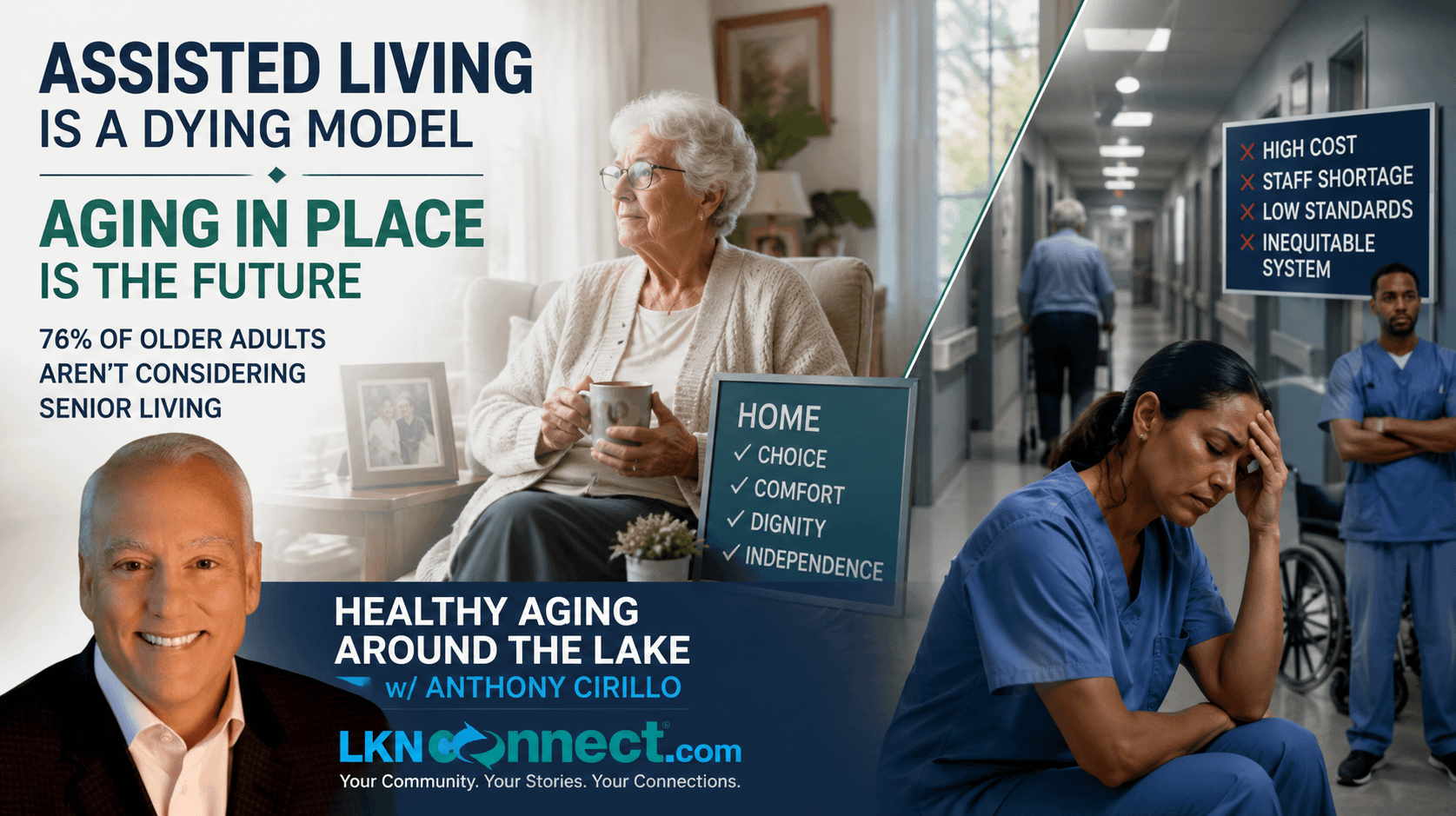

Two recent pieces – one from McKnight’s Senior Living and another from JD Supra – grabbed attention with the same finding: 76% of older adults are not even considering senior living. Both were reporting on the University of Michigan’s National Poll on Healthy Aging, which asked adults aged 50 to 80 about their plans. The results were clear: most want to stay home, not move into an institution.
These aren’t two different studies. It’s the same data point echoed across sectors – senior living trade media and legal analysis alike. And the conclusion is hard to escape: assisted living is no longer the default model. It’s a system propped up by wealth, struggling labor forces, and Medicaid loopholes – and it’s looking more like a relic than a solution.
Let’s be blunt: assisted living markets itself as independence with a safety net. But what it really sells is a tiered system of haves and have-nots.
It’s not just expensive – it’s fundamentally inequitable. Medicaid rarely covers assisted living comprehensively, and when it does, it’s often at reimbursement rates so low that facilities cut corners. Many workers – who are overwhelmingly immigrants, women, and people of color – don’t even get adequate health coverage themselves. Imagine that: the very people providing intimate care for frail elders often can’t afford care for their own families.
Here’s the dirty secret that few in the assisted living industry want to say out loud: the system depends on immigrant labor.
Aides, personal care attendants, and low-wage frontline staff are the backbone of senior living, and those positions are rarely filled by native born Americans. Thus, instead of creating a system that cares for the senior citizens and the care personnel, we have created one that is heavily dependent on the immigrant workforce.
With less people to work in the senior care facilities, residents go without showers, medications get delayed, workers burn out and quit.
And who pays the price? Older adults, and the families scrambling to fill the gaps.
For low- and middle-income older adults, Medicaid is supposed to be the safety net. But the patchwork of state-by-state waivers and underfunded home- and community-based services (HCBS) leaves huge gaps. Waitlists stretch into years. Coverage doesn’t match real-world needs. Families are forced into impossible trade-offs: pay out-of-pocket until you’re broke, or risk unsafe living arrangements.
Meanwhile, assisted living operators blame Medicaid for “low rates” while quietly catering to private-pay residents who can afford $6,000–$8,000 a month. The rest? They’re left out in the cold.
Here’s what the poll revealed at its core: people don’t trust assisted living. They see it as too costly, too institutional, and too risky. They want to stay in their homes and communities. And honestly? They’re right.
Aging in place is not just sentiment – it’s a survival strategy. With planning and support, it can deliver:
So what now? If assisted living is a dying model, how do we make aging in place work?
Don’t wait for a fall or hospitalization. Modify homes now – grab bars, ramps, no-step showers, smart lighting, widened doorways.
Explore “Village” models or Naturally Occurring Retirement Communities (NORCs). These grassroots, often volunteer-driven groups pool resources to provide rides, errands, and social connection.
Smart devices, medication reminders, and remote monitoring are great. But nothing replaces human presence. Technology should enhance, not replace, care.
Demand expansion of Medicaid’s home- and community-based services. Insist on fair wages and benefits for direct care workers.
Aging in place is not a solo project. Caregivers need backup – siblings, neighbors, church groups, paid aides. Don’t wait until burnout sets in.
Here’s the in-your-face truth: assisted living is not failing because people don’t understand it. It’s failing because people do understand it. They see the price tags, the staff turnover, the understaffed night shifts, the glossy brochures that don’t match the reality.
Older adults and caregivers are voting with their feet. They want something better than a half-institutional compromise. They want dignity, affordability, safety, and community. Assisted living can cling to the old model if it wants, but the future belongs to aging in place.
And the sooner we stop pretending otherwise, the sooner we can build a system that actually works – for everyone.
Are you looking at senior living/assisted living options or have you decided to age in place? What are your caregiver options? Have you accommodated your home for aging in place?

Anthony Cirillo has spent decades helping families, caregivers, and professionals rethink what aging can look like. A nationally respected voice in senior living and aging advocacy, Anthony brings insight, clarity, and compassion to conversations that matter. From navigating caregiving challenges to understanding the future of senior lifestyles, his perspective helps families make smarter, more confident decisions. If you care about aging well, supporting loved ones, or understanding the changing world of senior living, Anthony Cirillo is a voice worth hearing.