
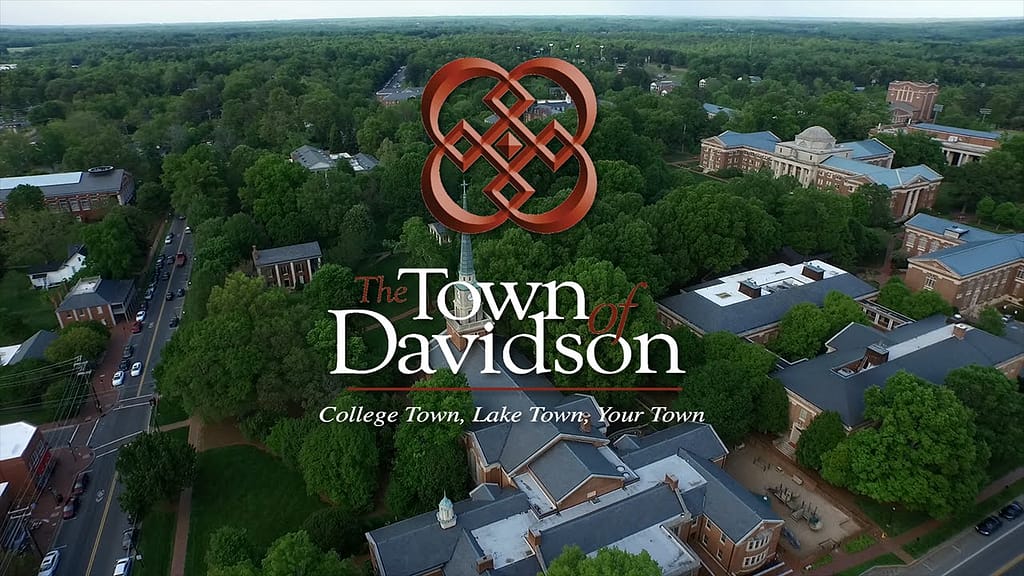
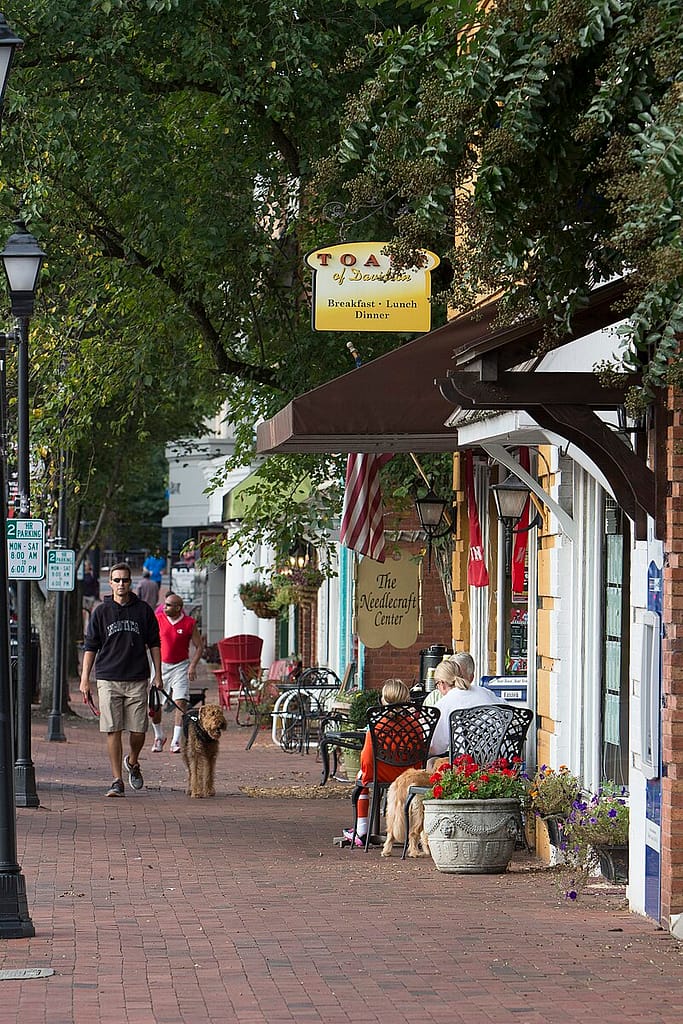
If you have recently moved to Davidson, you have probably already discovered that there is something different about this little town. Maybe it was the first time you walked down Main Street, had lunch at one of the restaurants, or wandered around Davidson College. Maybe it was the old brick buildings, the big trees and the historic homes that made you wonder how Davidson managed to keep so much of its character while everything around it has changed.
If you and I were sitting on the front porch together and you asked me what Davidson was like before Lake Norman, I’d probably start by telling you something that may surprise you: Davidson didn’t become a college town. Davidson was born as a college town. That’s an important distinction. Most towns already existed before a college came along, but Davidson was different. The college came first, and the town grew around it.
But even that isn’t quite the beginning of the story.
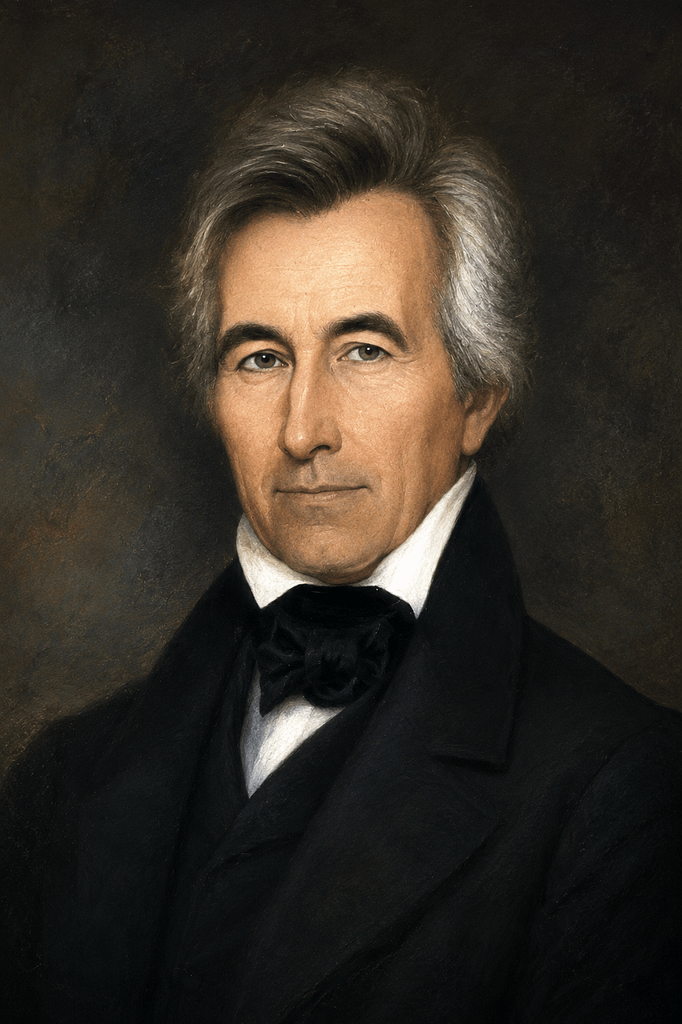
Long before Davidson College opened its doors, families were already settling this part of Mecklenburg County. One of them was the Davidson family, which had migrated south from Pennsylvania. John Davidson, described in early records as a prosperous merchant, became an important figure in the area, and Davidson’s Creek eventually took the family name. The settlement around the creek became an important center of Presbyterian life and helped establish the roots of the community that would eventually become Davidson.
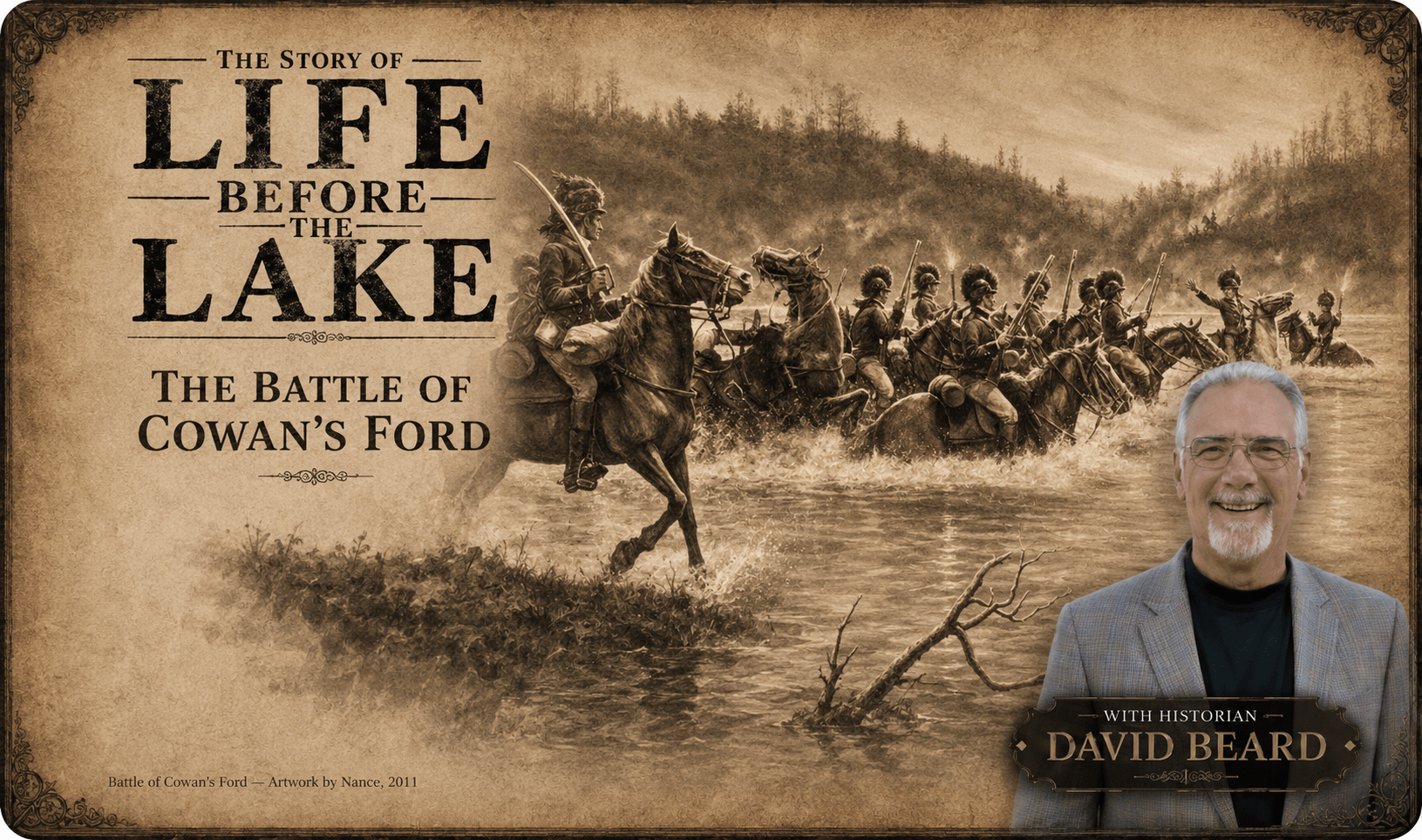
The Davidson family would produce several men who played important roles in North Carolina history, including General William Lee Davidson, the Revolutionary War hero for whom Davidson College was eventually named. General Davidson was killed at the Battle of Cowan’s Ford in 1781. If you’re new to the area, Cowan’s Ford may sound like someplace far away, but it was right here on the Catawba River, in the area we now know as Huntersville and Lake Norman.
The Presbyterian connection is an important part of this story, too. Bethel Presbyterian Church in what is now Cornelius was organized in 1828, and some of the people connected to Bethel would soon play an important role in establishing Davidson College. Robert Potts Jr., one of Bethel’s early elders, was instrumental in the college’s founding, while William Lee Davidson II, General Davidson’s son, provided the land. In 1835, Davidson sold 469 acres to the Concord Presbytery for the new college.
So when you look at Davidson and Bethel today, you’re really looking at two pieces of the same early story. The college didn’t appear in an empty landscape. The people who helped create it were already living here, farming the land, raising families and worshiping in churches like Bethel.
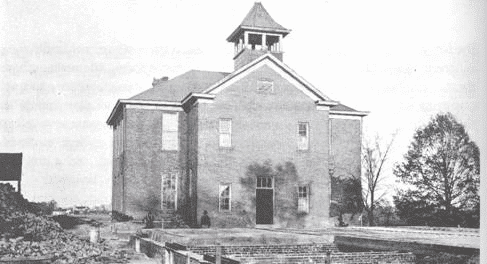
In March 1837, Davidson College opened its doors. Now imagine Davidson at that time. There was no downtown, no railroad, no cotton mill, no Main Street lined with brick buildings and certainly no lake. There were two professors, their families, 64 students and the surrounding farms and households. The college sat in what was essentially the countryside.
But people followed the college, and slowly a village began to grow around it. Students needed places to stay. Professors brought their families. Businesses opened to serve the college. Houses appeared along the roads. Churches and other community institutions followed. Between 1837 and 1850, the little settlement grew from a handful of households into a village of more than 200 people.
That is why I think the best way to understand Davidson is to remember that the college wasn’t something added to the town later. The college was the reason the town was here in the first place.
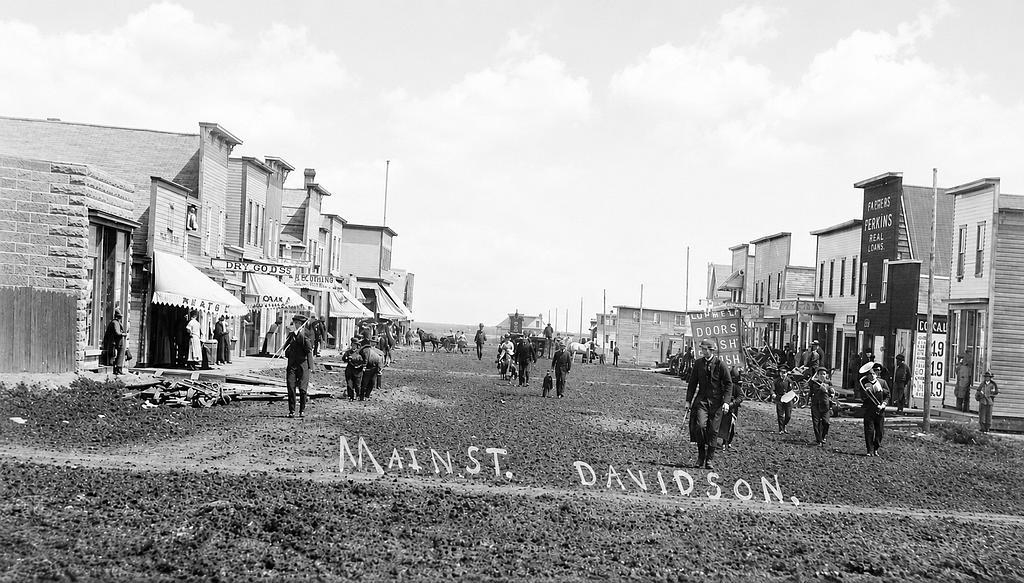
For decades, Davidson was essentially a small college village. The college influenced far more than education. It affected the town’s architecture, culture, commerce and even the way people thought about their community. The tree-lined campus and its classical buildings gave Davidson a character that was different from many of the other small communities developing across the Piedmont.
Then came the railroad, and that changed everything.
By 1874, rail service had been re-established through Davidson, connecting the little college community with Charlotte and other markets. Suddenly farmers could ship their crops, merchants could bring in goods and people could travel more easily. Davidson was no longer simply a college village sitting in the countryside. It was becoming a railroad town and a service center for the surrounding farms.
And that’s when cotton entered the story in a big way.
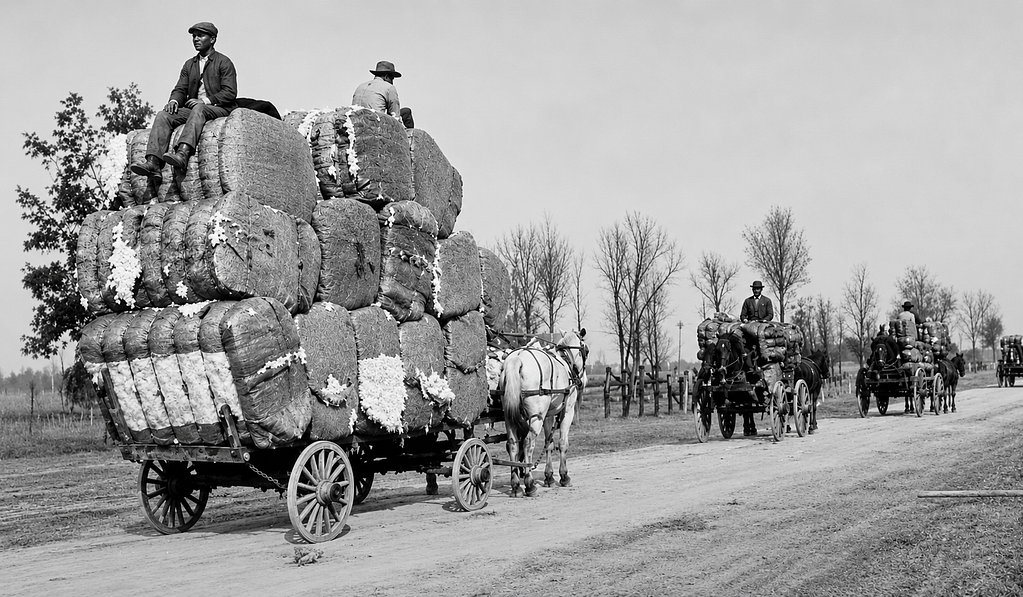
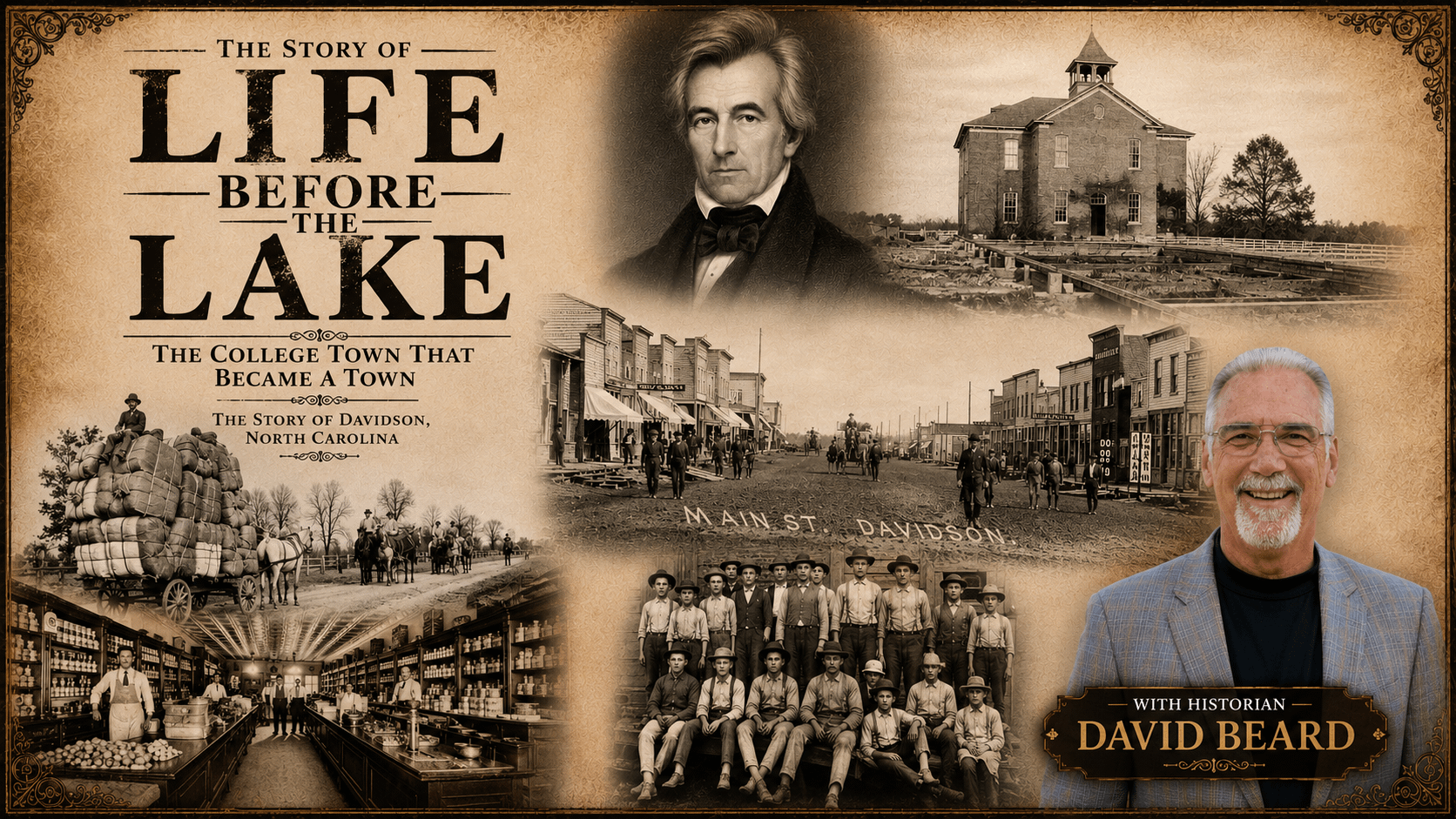
By the early 1900s, about 2,000 bales of cotton were being sold in Davidson each year. Imagine standing on Main Street back then and watching wagons loaded with cotton coming into town, horses pulling them toward the gin and the railroad. Farmers came to sell their crops and purchase the things their families needed, while merchants began building businesses to serve the growing community.
The railroad brought the cotton, and the cotton eventually brought the mills.
In 1890, the Linden Cotton Factory was built along Depot Street, becoming Davidson’s first textile plant. Then, in 1908, the Delburg Cotton Mills was constructed nearby. The mills brought something Davidson hadn’t had before on such a scale: a large industrial workforce.
And workers brought families.
Mill housing began appearing along Delburg and Depot streets. Families lived close enough to walk to work, children grew up together and neighbors knew one another. Those little mill houses that look so charming today weren’t built as historic homes. They were simply homes for working families.
This changed Davidson in a big way. The town was no longer simply a college community. It had become a combination of college town, railroad town and mill town, with each part influencing the others.
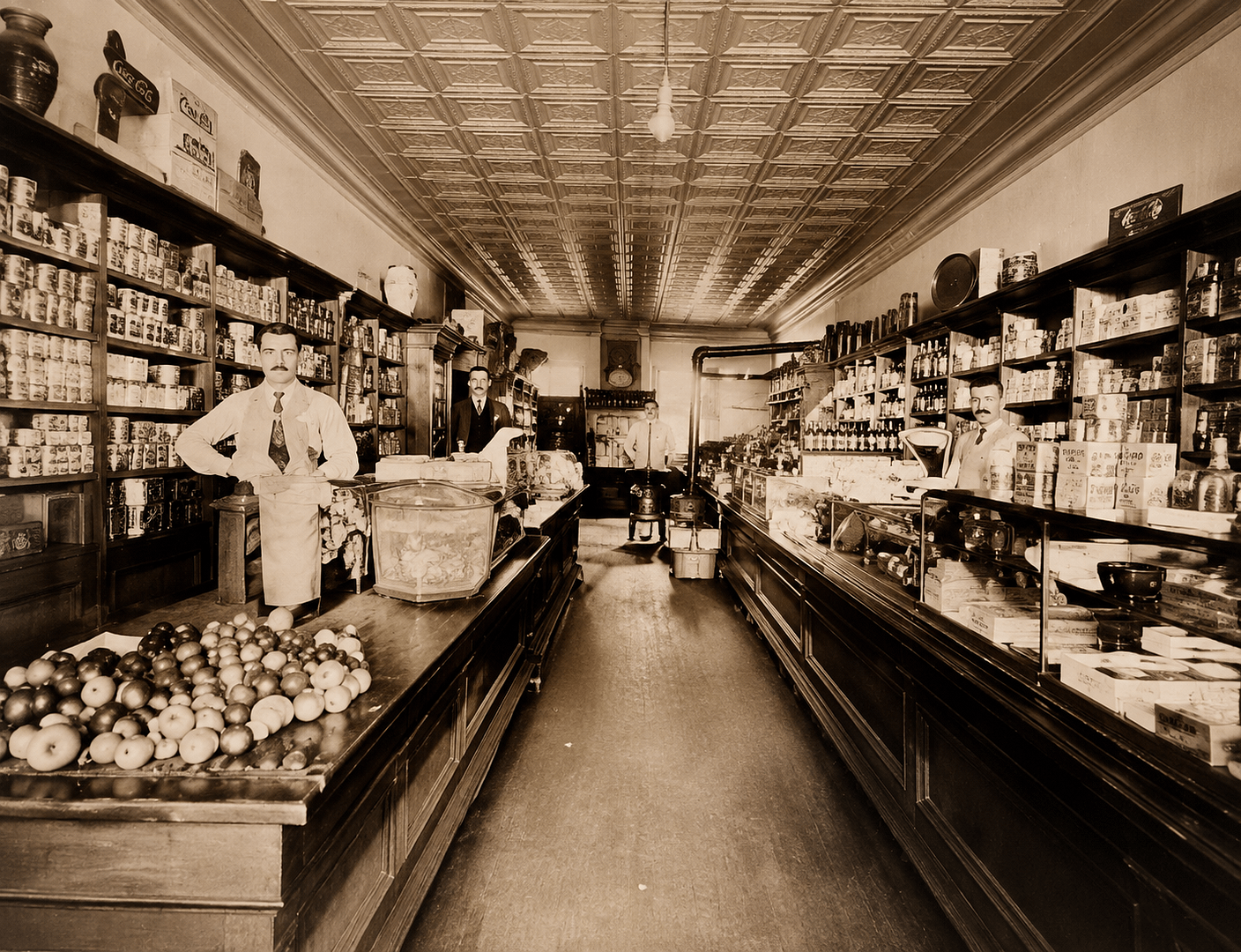
By 1910, Davidson’s population had reached about 500 people, and by the 1920s it had grown to roughly 1,500. Main Street was becoming the heart of the community, with general merchandise stores, a drug store, laundry, tailor shop, barber shops, hardware store, post office, bank and restaurants. Doctors, contractors and other professionals also had offices along the street.
Behind Main Street, along the railroad, was an entirely different side of Davidson. There was the Southern Railway depot, along with a livery, flour mill, sawmill, cotton gins, cottonseed oil company, blacksmith shop and buggy manufacturer. If you could stand there a hundred years ago, you would see a town that was busy with commerce, farming, manufacturing and college life all happening at the same time.
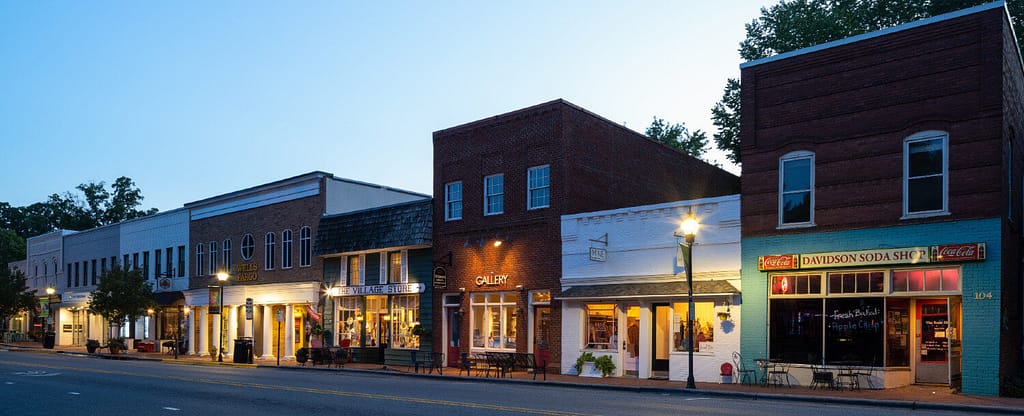
And in 1891, the community officially changed its name from Davidson College to Davidson. That change says a lot about what had happened. For more than half a century, the name of the community essentially told you what it was—a college settlement. But by 1891, the college had helped create a real town, with businesses, churches, families, mills and neighborhoods of its own.
Davidson was still a college town, but it had become a town of its own.
The two cotton mills eventually merged in 1923 and became the Davidson Cotton Mill. By the 1920s, the mill was operating thousands of spindles and producing yarn used for everything from hosiery to automobile tire fabric. For a little town that had started with a college in the countryside, Davidson had come a long way.
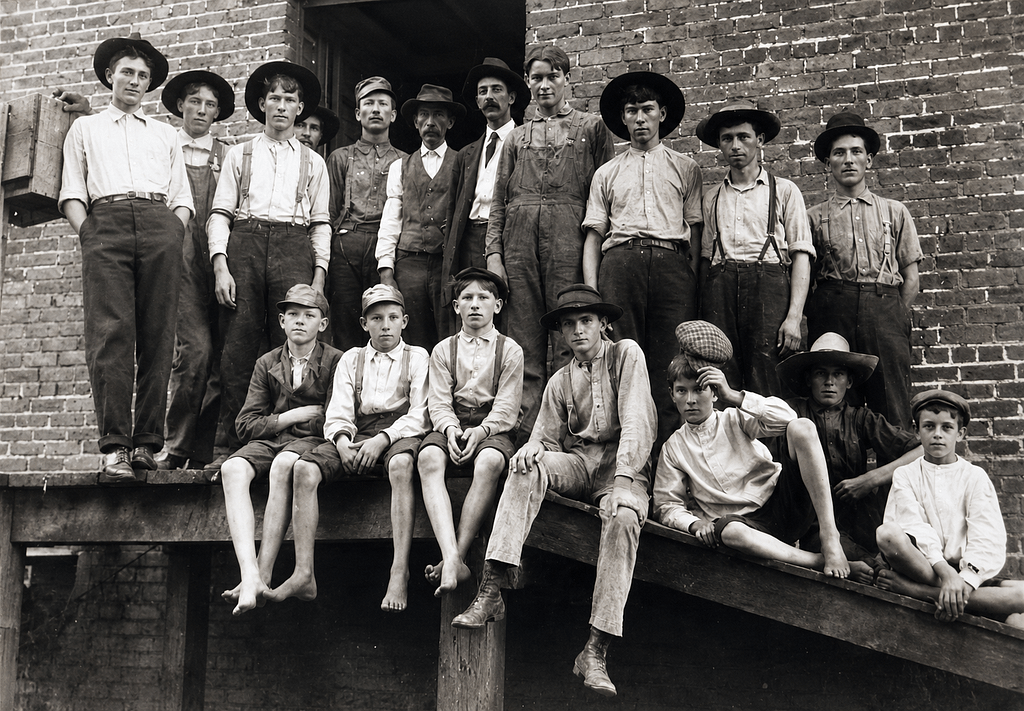
But the textile industry eventually changed. The Great Depression was hard on the mills, and changing manufacturing patterns after World War II made it increasingly difficult for older textile communities to compete. The Davidson Cotton Mill closed in 1950, bringing an end to an important chapter of the town’s industrial history.
The old mill buildings survived, however, and eventually found new life. After years of other uses, the property was renovated into shops, offices, restaurants and other spaces. Today, when you’re walking around the old mill area, it’s easy to see those buildings simply as part of Davidson’s charm. But remember what they were. They were factories where people worked, where cotton came in and yarn went out, and where generations of Davidson families earned their living.
The old mill houses tell the same story on a more personal level. They were where workers lived, raised their children and came home after a day’s work. Other neighborhoods developed around Davidson’s churches and schools, creating the beginnings of the neighborhoods we recognize today. Families not connected to the mills lived around South Street, Walnut Street, Concord Road, Sloan Street and Main Street, while others lived farther out along roads such as Griffith Street.
As Davidson grew, so did the town’s Main Street. The mixture of homes and businesses gradually gave way to the rows of one- and two-story brick buildings that are such a recognizable part of Davidson today. Again, the people building those structures weren’t thinking about preserving history. They were simply building the stores and offices they needed.
That’s one of my favorite things about looking at old photographs. The people in them never knew we would be looking at them 100 years later. They weren’t posing for history. They were simply living their lives.
And through all of those changes, one thing remained at the heart of Davidson: the college. The mills came and went, the railroad changed, businesses changed and the town grew, but Davidson College remained. The college didn’t simply happen to be located here. It helped create the community’s identity from the very beginning.
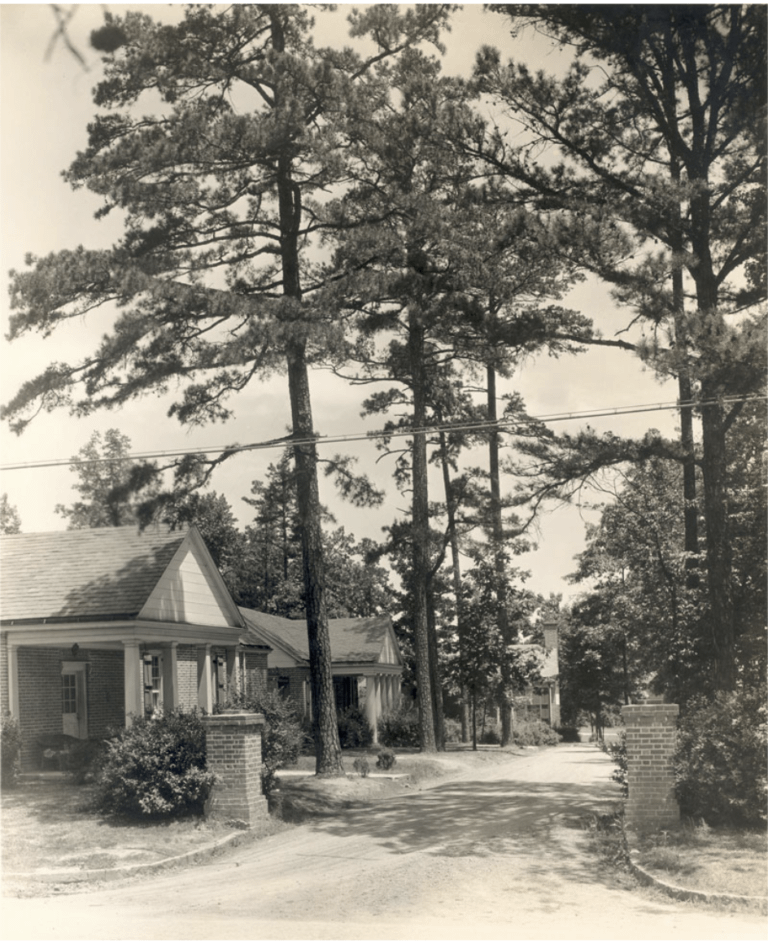
There is another part of Davidson’s history that is important to remember, too. Like the rest of the South, Davidson’s story includes slavery, segregation and the long struggle for equality. When Davidson College opened, enslaved people were part of the community and played a role in the early operation and construction of the college. After emancipation, Black families became an important part of Davidson’s continuing history, building churches, schools, businesses and neighborhoods of their own. Their stories are just as much a part of Davidson as the college, the mills and Main Street.
If we could go back 100 years, I think we’d recognize some things. We’d recognize Main Street, the college, the railroad and some of the old houses. But we’d hear different sounds—the train, the mill machinery, wagons coming down the road and people doing business in town. We might smell cotton, and we certainly wouldn’t see the lake.
That’s the part that’s easy to forget.
When Lake Norman was created in the late 1950s and early 1960s, Davidson had already been here for more than a century. The college was here. Bethel was here. The churches and schools were here. The railroad was here. The mills had already come and gone. Families had already spent generations building their lives here.
The lake didn’t create Davidson. It changed Davidson.
There’s a difference.
Even some of the things we take for granted today, like sidewalks, came much later. As Davidson began paving its streets and adding sidewalks, property owners were expected to pay part of the cost, which resulted in an uneven system. By the 1960s, many neighborhoods on the east side had sidewalks, while much of West Davidson had very few. It wasn’t until 1999 that the town borrowed money to begin installing sidewalks and making other road improvements in several West Davidson neighborhoods.
It’s a small detail, but I think it says something about Davidson. Towns don’t become what they are overnight. They grow a little at a time, one road, one house, one business, one church and one generation at a time.
So if you’ve just moved to Davidson, take a little time to look around. Walk down Main Street and look at the brick buildings. Look toward the college and remember that it was here before the town around it. Drive down Delburg Street and look at the old mill houses. If you’re over in Cornelius, take a drive down Bethel Church Road and look at Bethel Presbyterian Church.
You’re looking at pieces of a story that began long before Lake Norman.
I’ve lived in Huntersville my entire life, and my family can trace its history here back eight generations. Whenever people hear that, somebody usually asks me the same question: “What was it like around here before the lake?”
That’s really what started me looking into all of this. The more I researched, the more I realized how much history is sitting right under our feet. We drive on roads that were once farm lanes, pass churches that were here generations before Lake Norman, walk through buildings that were once stores and warehouses, and live around a lake that didn’t exist when most of these communities were getting started.
That’s why I’m writing Life Before the Lake for LKNConnect. I want to look at the communities around us—not just as they are today, but as they were when our parents, grandparents and great-grandparents were growing up here. Because sometimes the best way to understand where we live today is to find out what was here before us.
So the next time you’re walking down Main Street in Davidson, slow down for a minute and look around. Look at the college, the old buildings and the streets that have carried generations of people through this town. Think about the railroad, the cotton wagons and the mill workers who once walked those same streets. Think about the families who gathered at Bethel long before Lake Norman existed.
Most of all, remember that Davidson didn’t grow up and then get a college.
The college came first, and the town grew around it.
And nearly two hundred years later, that college is still at the heart of the community.
That’s Davidson.
Before the Lake.