
Lake Norman: Fact or Fiction?
Look across Lake Norman on a summer afternoon and it’s hard to imagine that beneath those sparkling waters was once a very different world. There were farms along the Catawba River, families working the land, roads and bridges connecting rural communities, cotton mills humming beside the river, and churches and cemeteries marking generations of life. Places such as Beatty’s Ford and Sherrill’s Ford were working river crossings, and the ground beneath the lake even witnessed the 1781 Battle of Cowan’s Ford, where General William Lee Davidson was killed.

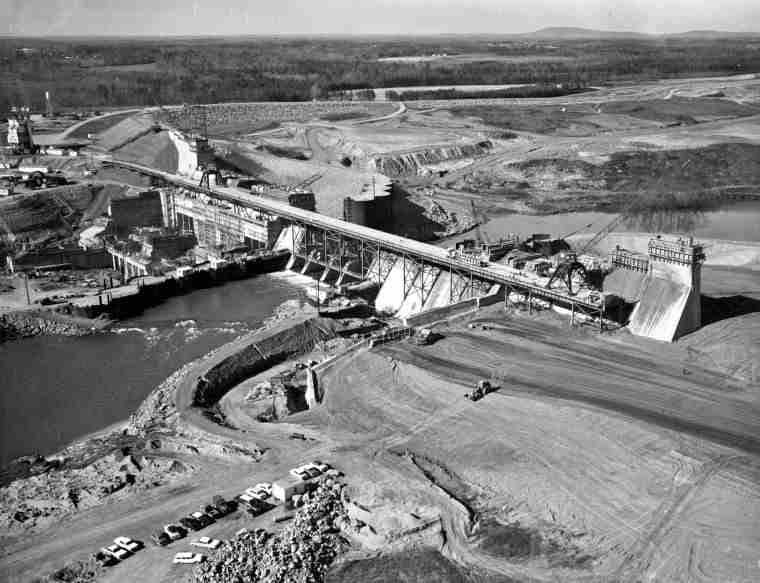
Then the water came. Beginning in 1959, Duke Power built Cowan’s Ford Dam, and the rising Catawba slowly covered much of that old landscape. Homes, farms, roads, bridges and mill communities disappeared beneath the reservoir. The people moved, but the stories didn’t. Over the decades, those stories grew—some rooted firmly in history, others stretched by memory and repetition, and a few becoming legends all their own.
Today, ask what lies beneath Lake Norman and you may hear about underwater houses, old roads, forgotten cemeteries, abandoned cars, entire towns and a mysterious creature known as Normie. But how much of it is actually true? Here are 25 Lake Norman stories—and the facts, qualifications, fiction and legends behind them.

1. Lake Norman Wasn’t Always Here
FACT: Lake Norman is a man-made reservoir created by Cowan’s Ford Dam. Construction began September 28, 1959, and the dam was completed in the early 1960s. The reservoir subsequently filled, creating the lake we know today.
2. There Was a Real World Beneath Today’s Lake
FACT: The area now covered by Lake Norman contained farms, homes, roads, bridges, mills, churches, businesses and communities.
People lived and worked on the land for generations before the lake was created.
3. A Revolutionary War Battlefield Is Beneath Lake Norman
FACT: The Battle of Cowan’s Ford took place in 1781. General William Lee Davidson was killed during the battle, and the historic battlefield is now beneath Lake Norman.
4. Beatty’s Ford and Sherrill’s Ford Are Older Than Lake Norman
FACT: Both were historic crossings of the Catawba River long before Lake Norman existed.
The names survive today, even though the original river crossings are beneath the lake.
5. Old Roads Are Beneath the Lake
FACT: Historic roads and transportation routes were inundated when Lake Norman was created. Routes associated with Beatty’s Ford and Tuckaseegee were part of the historic landscape.
6. There Were Mill Communities Where Parts of Lake Norman Are Today
FACT: Long Island Mill and East Monbo Mill were real cotton-mill communities along the Catawba River.
They included not only mills, but homes, workers and families.

7. People Actually Lived in the Future Lakebed
FACT: Farms and family homesteads occupied much of the area that eventually became Lake Norman.
Some families had lived there for generations before Duke Power acquired the property.
8. Historic Homesites Are Now Underwater
FACT: Historical research has identified numerous homesites that were inundated by the reservoir.
The families moved, but their former homesites became part of the lake.
9. Historic Mills and Mill Sites Are Underwater
FACT: Long Island Mill, East Monbo Mill and earlier mills operated along the Catawba River before Lake Norman was created.
The mill communities were an important part of the region’s industrial history.
10. Lake Norman Transformed the Communities Around It
FACT: The creation of Lake Norman dramatically changed the economic and geographic character of the surrounding region.
Communities including Cornelius, Davidson, Huntersville, Mooresville, Denver and Sherrills Ford were ultimately transformed by the lake.
TRUE, BUT NEEDS QUALIFICATION
11. Duke Power Bought the Land for Lake Norman in the 1920s
TRUE, BUT INCOMPLETE: Duke Power’s plans for developing the Catawba River and its land acquisition extended over several decades. Major acquisition continued throughout the first half of the 20th century.
12. Duke Forced Everyone Off Their Land
MISLEADING: Some people sold their property, some negotiated, some resisted, and some properties were ultimately acquired through condemnation.
The experiences of landowners were not all the same.
13. Entire Communities Disappeared Beneath the Lake
TRUE, WITH QUALIFICATION: Physical communities, farms and mill villages were displaced, relocated or inundated.
The people, however, did not disappear. Families moved, communities continued elsewhere, and descendants still preserve their histories.
14. There Are Towns Beneath Lake Norman
MISLEADING: Historic community sites and remnants are beneath the lake, but intact towns are not sitting underwater exactly as they existed before the reservoir was created.
15. There Are Houses Underwater
PARTIALLY TRUE: Historic homesites and structural remains are beneath the lake. There are foundations of buildings that existed. However, claims that large numbers of complete houses remain perfectly intact underwater have not been established.
16. There Are Cemeteries Beneath Lake Norman
NEEDS QUALIFICATION: Cemeteries and burial grounds were affected by the project, and some graves were relocated. Some people, after being contacted by Duke Power, choose to only move headstones from private cemeteries but not to relocate older graves.
17. Lake Norman Was Duke Power’s Seventh Lake
TRUE, WITH QUALIFICATION: Historical accounts describe Lake Norman as the seventh and final major lake in the original sequence of Duke Power’s Catawba River development. Today, however, the broader Catawba-Wateree system is commonly described as containing 11 reservoirs.
From north to south, they are Lake James, Lake Rhodhiss, Lake Hickory, Lookout Shoals Lake, Lake Norman, Mountain Island Lake, Lake Wylie, Fishing Creek Reservoir, Great Falls Reservoir, Cedar Creek Reservoir and Lake Wateree.
The reservoirs were constructed at different times, so the modern list should not be confused with the historical sequence in which Duke Power developed its hydroelectric projects. Lake Norman was the final major reservoir added to Duke Power’s original Catawba River hydroelectric development.
18. Lake Norman Was Built Only to Generate Electricity
MISLEADING: Power generation was central to the project, but the reservoir also became part of a larger water-resource system serving several Duke facilities.
FALSE
19. Lake Norman Was Built Specifically for McGuire Nuclear Station
FALSE: Lake Norman was completed before McGuire Nuclear Station began commercial operation.
McGuire later became a major user of the lake’s water, but the nuclear plant did not create Lake Norman.

20. Lake Norman Was Built for Recreation
FALSE: Recreation eventually became one of Lake Norman’s most important uses, but that was not the original purpose of the project.
The reservoir was created as part of Duke Power’s energy and water-resource development.
21. An Entire Town Is Perfectly Preserved Beneath Lake Norman
FALSE: Historic structures, roads, foundations and community sites were inundated.
There is no evidence that an entire town remains perfectly preserved beneath the lake.
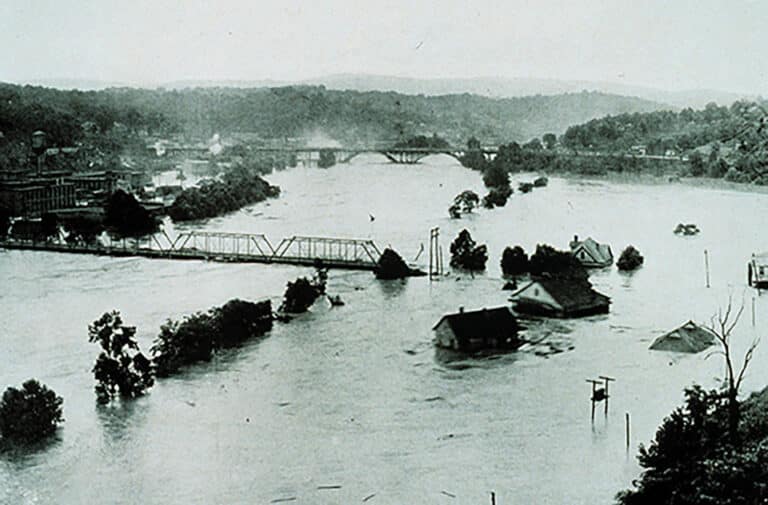
22. The 1916 Flood Created Lake Norman
FALSE: The catastrophic Catawba River flood of 1916 occurred more than four decades before construction of Lake Norman.
The flood is an important part of Catawba River history, but it did not create Lake Norman.
23. Lake Norman Was Built to Prevent Another 1916 Flood
FALSE / OVERSIMPLIFIED: Flooding was part of the broader history of dam development on the Catawba, but Lake Norman was primarily developed as part of Duke Power’s hydroelectric and water-resource system.
24. Duke Burned Every House Before Flooding the Lake
FALSE / UNSUPPORTED: Different structures were handled in different ways. Some were removed, some demolished, and some homes were moved outside the future lakebed. I remember seeing houses coming by my house on Gilead Road, near the Beatties Ford Road.
There is no evidence that Duke simply burned every house.

25. An Intact Network of Old Roads Can Still Be Driven Beneath Lake Norman
FALSE: Historic roads and crossings were inundated, but there is no functioning underwater road network beneath Lake Norman.
THE LEGENDS

Not every Lake Norman story fits neatly into fact or fiction. Some have become part of the area’s folklore and are best described as legends or unverified stories.
Normie, the Lake Norman Monster, is perhaps the most famous. People have reported seeing a large creature in the lake for decades, with descriptions ranging from a giant fish to something resembling a serpent or prehistoric animal. There is no scientific evidence confirming that an unknown monster lives in Lake Norman.
Another version of the story claims that McGuire Nuclear Station created or mutated Normie. There is no evidence supporting that claim.
Then there is the 1950 Lincoln, supposedly resting somewhere on the bottom of Lake Norman. The story has been repeated for years, but the presence of the specific automobile has never been conclusively established.
Other stories involve underwater schools, churches, houses, wells, fences, abandoned cars and even entire communities. Some may have a historical basis, but each individual claim needs to be verified rather than accepted simply because the story has been repeated for generations.
THE REAL STORY
The truth about Lake Norman may be more interesting than the legends.
Before the lake, there were farms, family homes, churches, burial grounds, roads, bridges, mills, businesses and communities. There was a Revolutionary War battlefield. There were families who had lived along the Catawba River for generations.

When the water came, that landscape changed forever.
But its history didn’t disappear. It survives in photographs, maps, deeds, newspaper accounts, historical records, oral histories and the memories of the families who lived there.
Lake Norman may have covered the landscape, but it didn’t erase the stories.
And sometimes, the best way to understand the lake we know today is to separate the facts from the fiction about the world that came before it.
I have lived in Huntersville my entire life. We actually trace my family’s history back for eight generations. When folks hear this, they ask, “What was life like before the lake?” That question inspired me to research the history of the area. This new feature is the result of those questions. I plan to write many articles about “Life Before The Lake” and post them on www.Lknconnect.com’s website.

You searched for Life Before the Lake | LKNConnect Community
Information for this article came from several sources. One was Chuck McShane’s book A History of Lake Norman, published by The History Press, Charleston, SC 29403, Copyright, 2014. The other source was from Cindy Jacobs’ book, Images of America, Around Lake Norman, published by Arcada Publishing, Charleston, SC Copywrite, 2008
Photos were Courtesy of Duke Power