
The Revolutionary War Battle Beneath the Lake
Have you ever crossed the NC 73 bridge at Cowans Ford and wondered what was here before Lake Norman?
Most of us probably haven’t. We cross the bridge, look out over the water, and keep going. Today, Cowans Ford is surrounded by homes, boats, docks, and some of the most beautiful views on Lake Norman.
But it wasn’t always that way.
Before Lake Norman, there was the Catawba River. And before there was a bridge, there was a shallow place in the river where people could cross. That place became known as Cowan’s Ford.
In February 1781, it also became a battlefield.
Cowan’s Ford Before the Lake
Long before Duke Power built the dam that created Lake Norman, Cowan’s Ford was an important crossing on the Catawba River.
The ford was named for John Cowan, an early settler in the area. A ford was simply a place where people, horses, wagons and livestock could cross a river without a bridge.
In the 1700s, things were different. If you wanted to travel from one side of the river to the other, you had to find a place where the water was shallow enough to cross. Cowan’s Ford was one of those places, making it an important route through the Carolina backcountry.
And in 1781, during the American Revolution, whoever controlled the crossing controlled an important route through North Carolina.
The War Comes to North Carolina
By the winter of 1781, the Revolutionary War had reached a critical point in the Carolinas.

British General Charles Cornwallis was trying to destroy the American forces in the South. American General Nathanael Greene knew he couldn’t afford to fight Cornwallis in a battle where his army could be destroyed.
Then came the American victory at Cowpens.
On January 17, 1781, General Daniel Morgan defeated a British force at Cowpens, South Carolina. Cornwallis was determined to catch Morgan and punish the American army.
Greene, however, had another plan. Rather than stand and fight immediately, he began moving his army north toward the Dan River. If he could stay ahead of Cornwallis and get across the river, he could regroup and prepare for the next battle.
It became known as the Race to the Dan.
The problem was the Catawba River.
General William Lee Davidson

Greene needed someone to slow Cornwallis down.
That responsibility fell to Brigadier General William Lee Davidson.
Davidson wasn’t some distant military leader who had been sent into North Carolina. He was a Mecklenburg County man—a farmer, lawyer, legislator and military officer who knew the area and the people who lived here.
Davidson was given a difficult job. He wasn’t expected to defeat Cornwallis. He simply needed to slow him down.
Every hour mattered.
Davidson’s militia were positioned to defend the important crossings of the Catawba River, including Cowan’s Ford. They knew the British were coming. They just didn’t know exactly where Cornwallis would cross.
Cornwallis Makes His Move

Cornwallis knew the Americans were watching the river crossings.
So he tried to fool them.
He sent troops toward Beattie’s Ford, making it appear that he intended to cross there. Davidson watched carefully and moved the bulk of his men toward Cowan’s Ford, believing that Cornwallis might be trying to find another way across.
He was right.
During the night, Cornwallis moved his main force toward Cowan’s Ford.
The river was running high because of recent rains. And the water was cold.
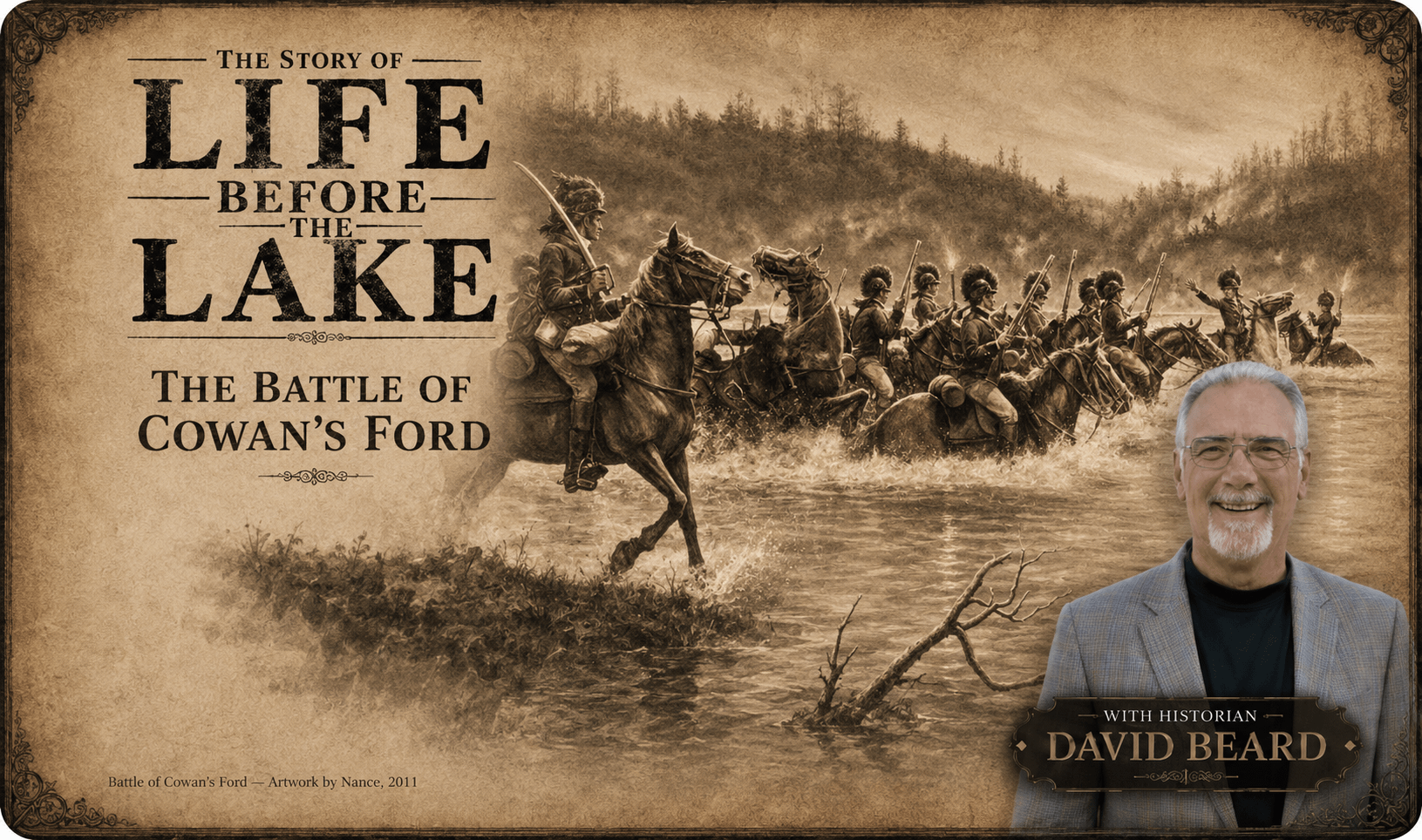
Before daylight on February 1, 1781, British soldiers began moving into the Catawba River. Cowan’s Ford actually had two established crossing routes—a wagon ford and a shallower horse ford. Cornwallis chose the wagon ford, while Davidson had expected the British to use the horse ford.
For a while, the Americans didn’t know the British were coming.
Then someone saw them.
A shot rang out.
The Battle of Cowan’s Ford had begun.
The Battle

Davidson’s militia opened fire on the British soldiers as they struggled out of the river.
The Americans had the advantage of higher ground overlooking the crossing. For a short time, the British were exposed and vulnerable.
But Cornwallis had a large, well-trained army. More and more British soldiers made it across the river and began moving toward the American position.
Davidson was with his men, directing the defense.
Then tragedy struck.
A British musket ball hit General William Lee Davidson in the chest, killing him almost instantly.
Davidson’s death changed the battle. The American militia began pulling back. Other officers helped organize the retreat and keep the British from turning the withdrawal into an even greater disaster.
The battle itself was short.
But it had accomplished something important.
A Battle the Americans Didn’t Have to Win

The Americans didn’t have to win at Cowan’s Ford. They needed to delay Cornwallis long enough for Greene to continue his retreat.
The British did cross the river, so in that sense it was a British victory. But the fight was part of Greene’s larger strategy of making Cornwallis spend time, men and supplies chasing the American army.
Greene and his army continued north toward the Dan River, where they escaped into Virginia, regrouped, gathered supplies and prepared for what came next.
Greene would later turn and face Cornwallis at the Battle of Guilford Courthouse. Although Cornwallis claimed victory there, his army suffered heavy losses.
The British campaign continued north, eventually reaching Virginia. A few months later, Cornwallis surrendered at Yorktown.
The Revolutionary War wasn’t decided at Cowan’s Ford. But what happened here was one part of the chain of events that eventually led there.
Beneath Lake Norman

There’s another reason the story of Cowan’s Ford is different from many other Revolutionary War stories.
You can’t really see the battlefield anymore.
It’s underwater.
When Duke Power built Cowans Ford Dam and Lake Norman was created, the rising waters covered the old river crossing. The ford where people once crossed the Catawba River disappeared beneath the lake.
The General William Lee Davidson Monument helps preserve the memory of the man who died defending the crossing. Hopewell Presbyterian Church is closely connected to Davidson and the history of the surrounding community. Beaver Dam Historic House also helps tell the story of the people who lived in this area long before Lake Norman changed the landscape.
The history didn’t disappear. The landscape changed.
Look Across the Water
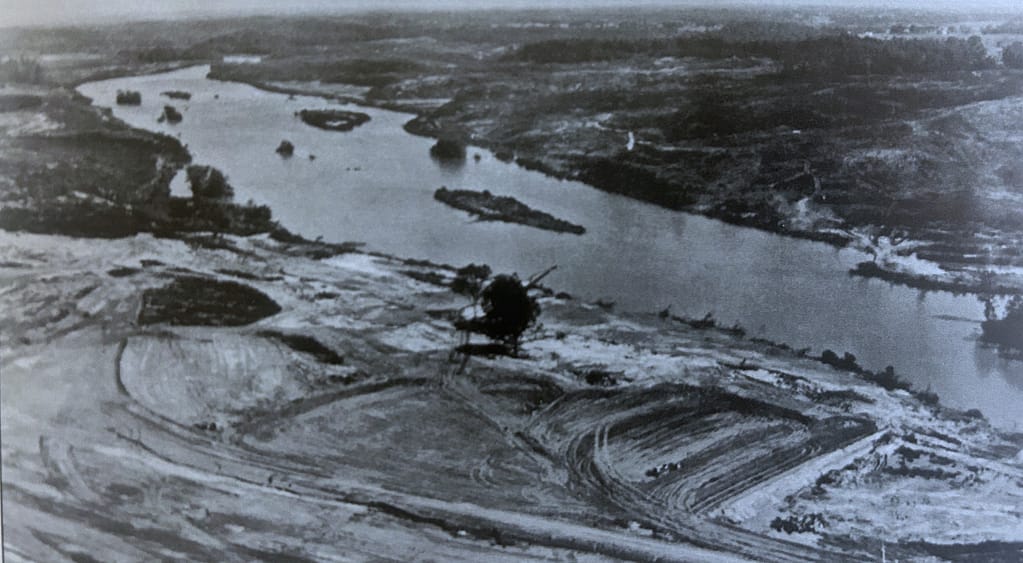
Today, thousands of people cross the NC 73 bridge at Cowans Ford without giving the water below a second thought.
Boats cruise across the lake. Fishermen cast their lines. Families enjoy the shoreline.
It’s hard to imagine that this peaceful place was once the scene of a Revolutionary War battle.
But history has a funny way of hiding in plain sight.
The next time you cross Cowans Ford, take a moment to look across the water.
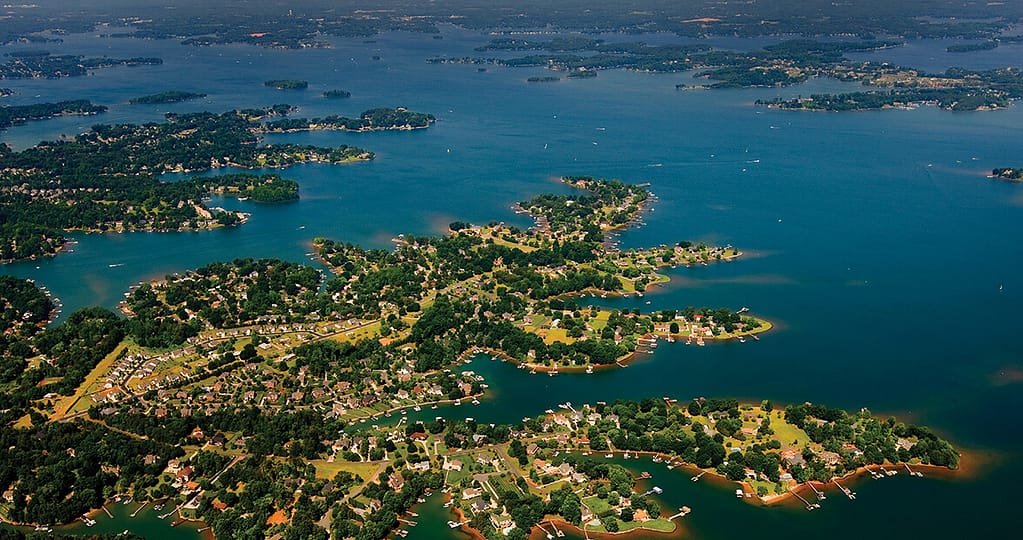
Try to picture the lake as a river. Picture the wooded riverbanks instead of the houses. Picture soldiers moving through the cold water before daylight.
And then remember that many of the men who fought here were North Carolinians defending their homes and communities.
For one cold morning in February 1781, they stood at Cowan’s Ford and bought General Nathanael Greene something he desperately needed—time.
And sometimes, a little time can change history.
The next time you’re on Lake Norman, remember that beneath the water is a story that was here long before the lake.
Sometimes the biggest stories in our area’s history aren’t found in old buildings or museums. Sometimes they’re waiting beneath the waters of Lake Norman.
You searched for Life Before the Lake | LKNConnect Community
If you have comments or questions, please contact me at Dbeard@Lknconnect.com. Also, if there are any other suggestions things to research for this series, let me know. Thanks, for reading and sharing.
Sources & Further Reading
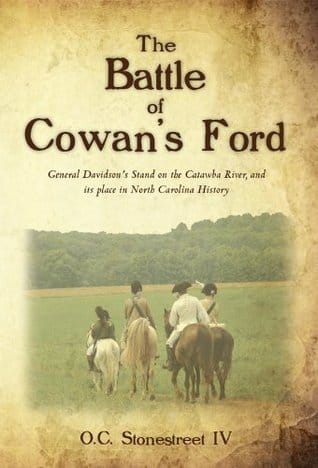
O. C. Stonestreet IV, The Battle of Cowan’s Ford: General Davidson’s Stand on the Catawba River, and Its Place in North Carolina History (2012).
North Carolina Department of Natural and Cultural Resources, Historical Marker L-22, Battle of Cowan’s Ford.
Jerry L. Cross, “Cowan’s Ford, Battle of,” NCpedia / Encyclopedia of North Carolina, edited by William S. Powell.
John Buchanan, The Road to Guilford Courthouse (1997).
Hugh F. Rankin, Greene and Cornwallis: The Campaign of the Carolinas (1976).
Major William A. Graham, General Joseph Graham and His Papers on North Carolina Revolutionary History (1904).
Editorial note: This article is written as a local-history feature in the Life Before the Lake style. Historical facts are summarized in original wording rather than reproduced from any source. The references above are credited for research and further reading.