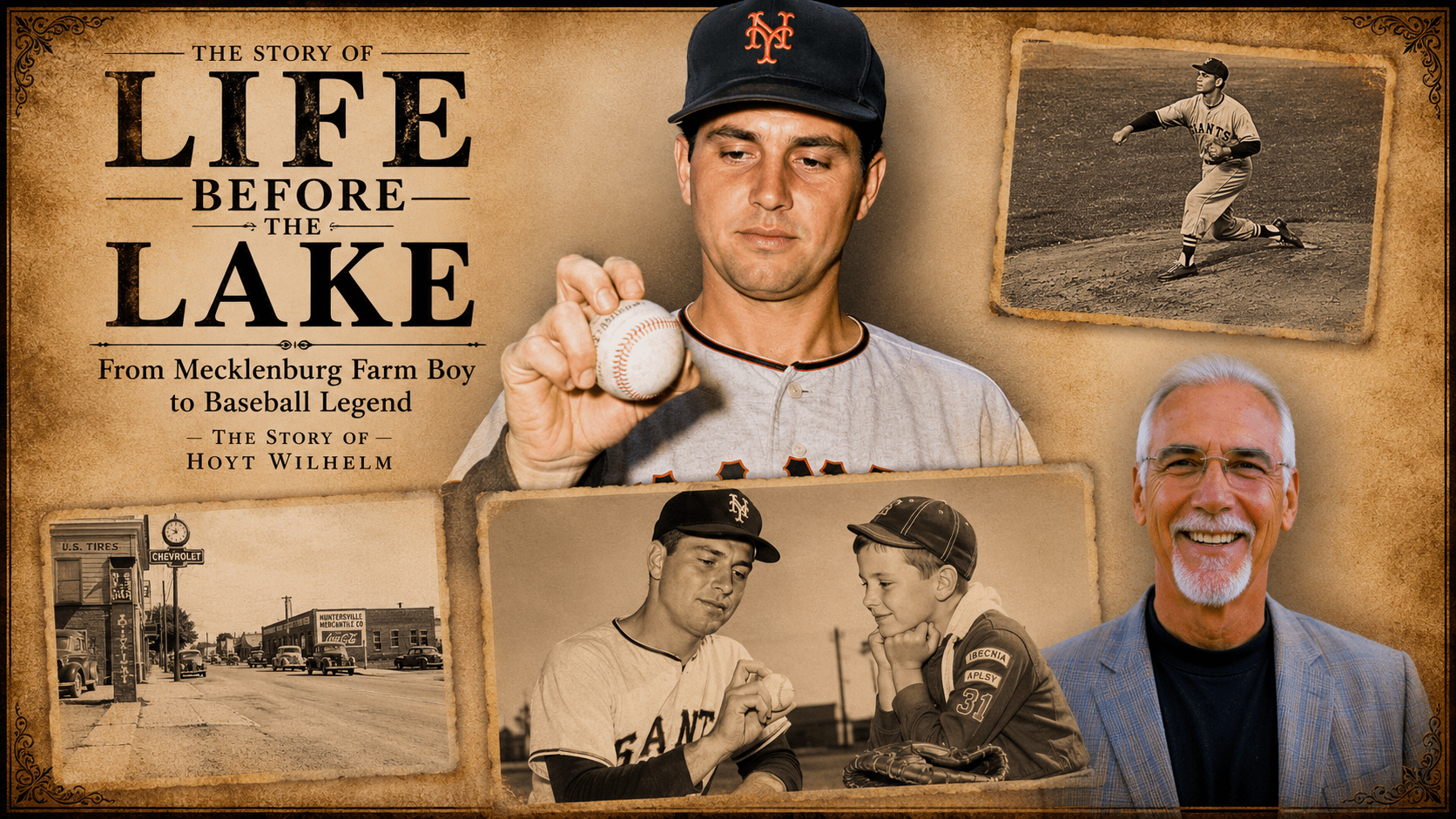

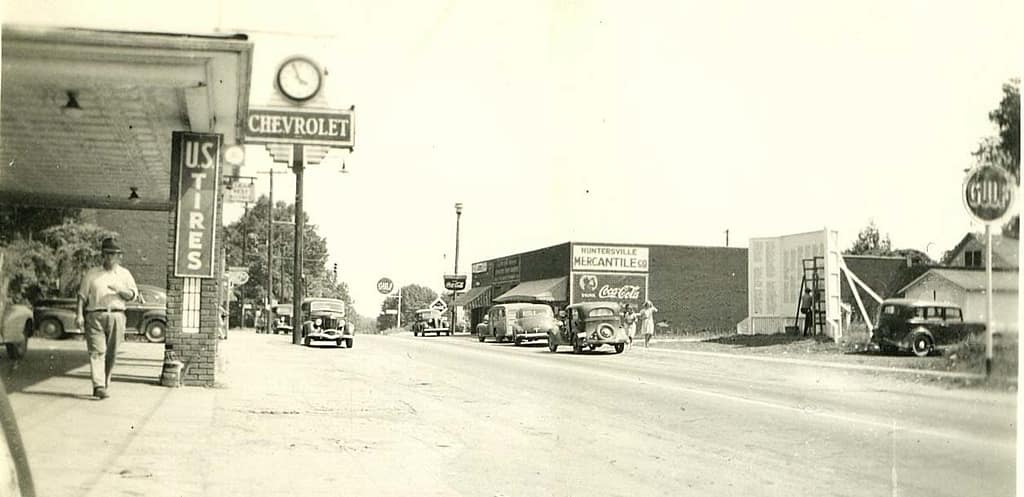
Before Huntersville became one of North Carolina’s fastest-growing communities, it was a quiet farming town where red clay roads wound through cotton fields, dairy farms stretched across the countryside, and neighbors measured time by the seasons instead of the clock. Long before Lake Norman transformed the landscape, children found their own adventures in open fields, country stores, and makeshift baseball diamonds.
Born in Huntersville on July 26, 1922, James Hoyt Wilhelm grew up as one of eleven children on a family farm. Chores came before baseball, but every spare moment was spent with a ball in his hand. Without an overpowering fastball, he mastered the mysterious knuckleball—a pitch that fluttered, dipped, and danced in ways hitters had never seen.
World War II interrupted his baseball dreams. Wilhelm served in the U.S. Army during the Battle of the Bulge, was wounded by German artillery, and received the Purple Heart. Even with shrapnel remaining in his body, he returned home determined to continue pitching.

After seven years in the minor leagues, Hoyt finally reached the New York Giants in 1952 at age twenty-nine. He immediately made an impact, finishing 15–3 with a league-leading 2.43 ERA. In a twist of baseball history, he hit a home run in his very first Major League at-bat—the only home run of his career.
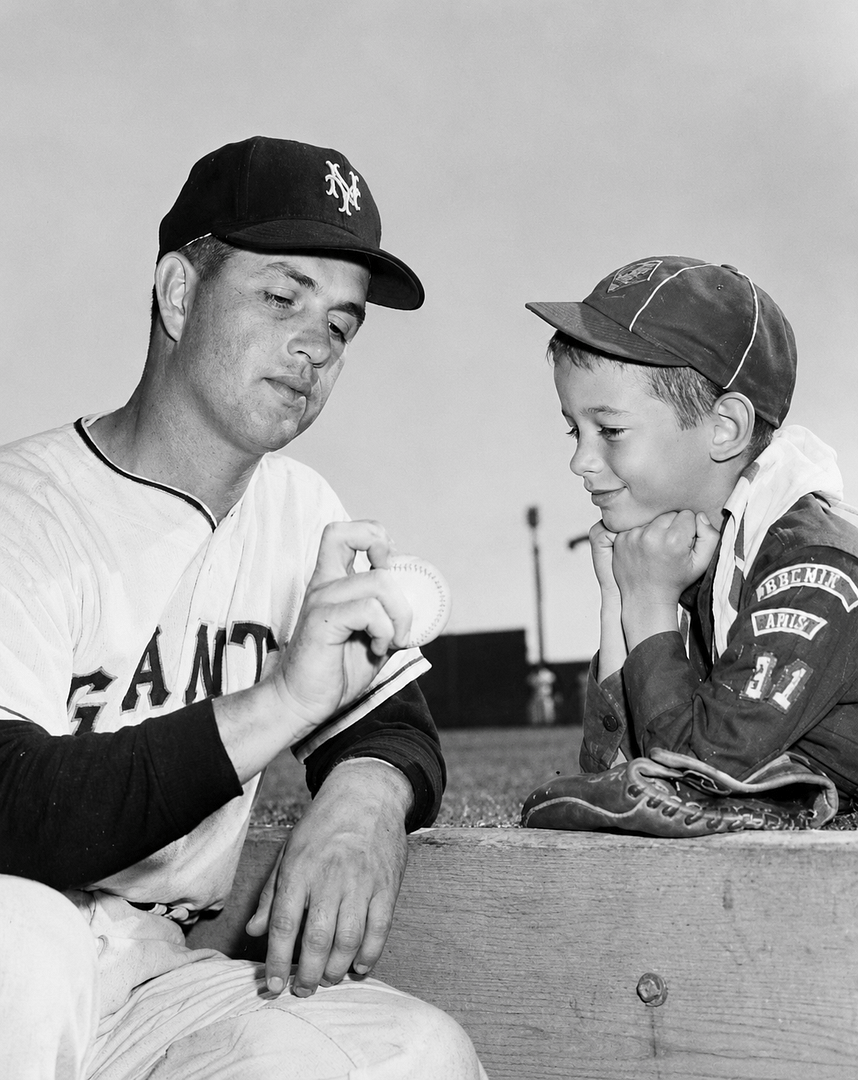
Hall of Famer Brooks Robinson once joked, “He knew where it was going when he threw it, but when he got two strikes on you, he’d break out one that even he didn’t know where it was going.” Baltimore Orioles manager Paul Richards even created an oversized catcher’s mitt to help receivers handle Hoyt’s unpredictable pitch.
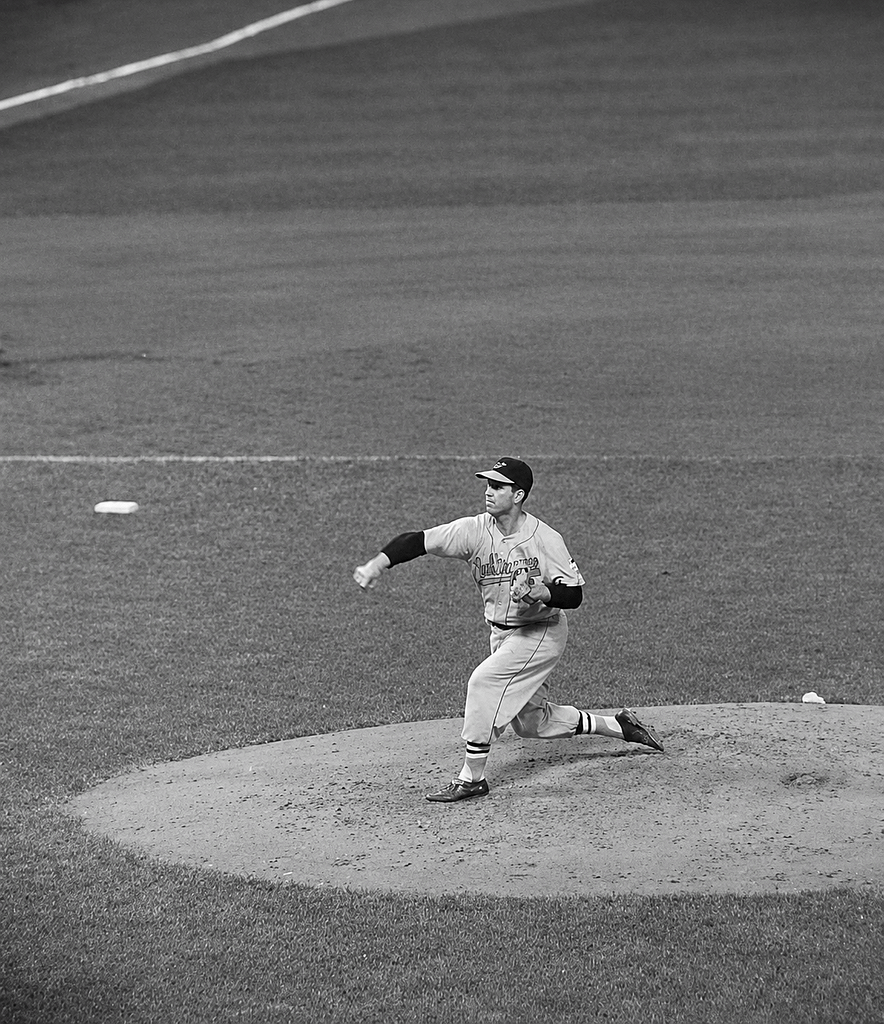
Over 21 seasons, Wilhelm pitched in 1,070 games, won 143 games, recorded 228 saves, earned eight All-Star selections, and helped the Giants win the 1954 World Series. In 1985 he became the first relief pitcher elected to the National Baseball Hall of Fame, paving the way for generations of closers and bullpen specialists.
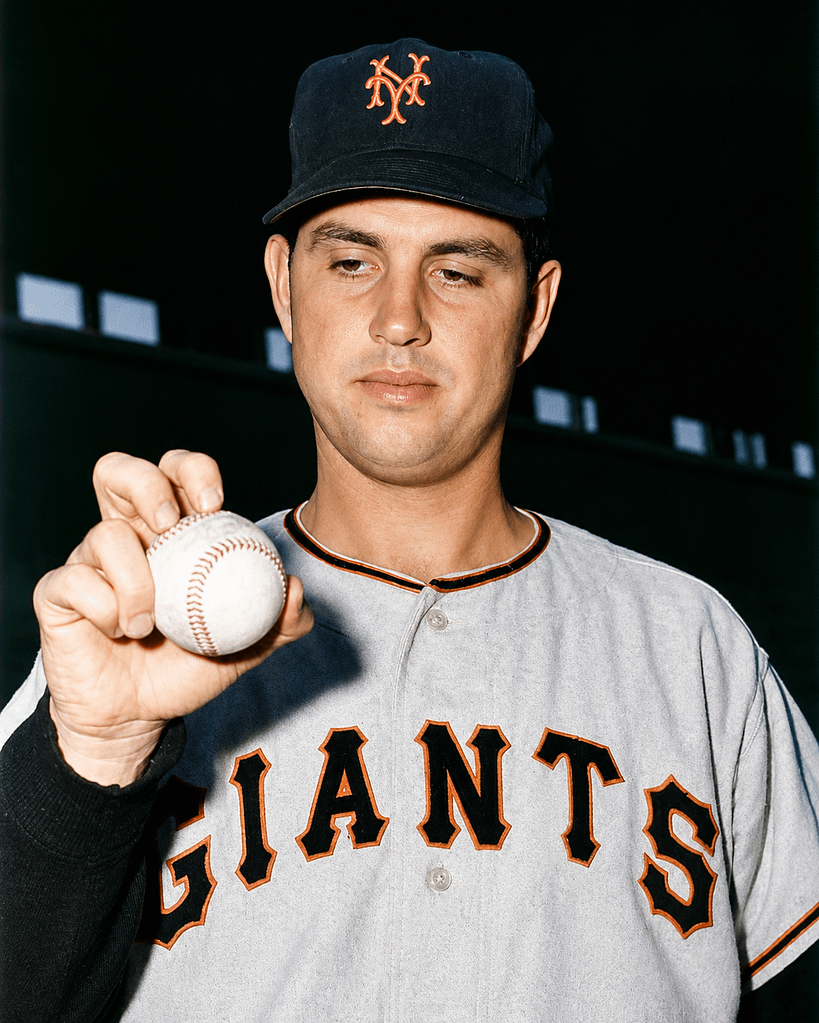
Despite his accomplishments, friends remembered him as the same humble farm boy from Huntersville. His story reminds us that greatness doesn’t always begin under bright lights. Sometimes it starts on a quiet North Carolina farm with a dream, determination, and a baseball that refused to fly straight.
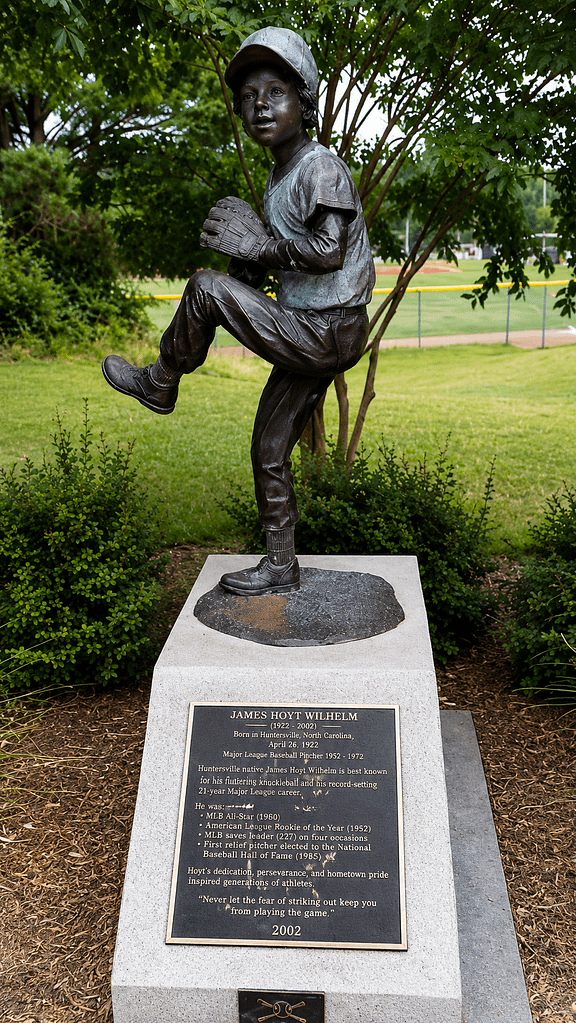
Reading about Hoyt Wilhelm’s remarkable career is one thing, but seeing him pitch is something every baseball fan should experience. These rare videos capture the Huntersville native in action and show why his dancing knuckleball baffled Major League hitters for more than two decades.
This classic footage showcases Wilhelm’s famous knuckleball and explains why he became one of the most successful relief pitchers in baseball history.
This additional footage offers another look at Wilhelm’s smooth delivery, remarkable control, and the fluttering knuckleball that helped make him the first relief pitcher elected to the National Baseball Hall of Fame.
Whether you’re a lifelong baseball fan or simply enjoy learning about Huntersville’s rich history, these videos bring Hoyt Wilhelm’s incredible story to life in a way that words alone never could.
People often ask me a simple question:
“What was life like before Lake Norman?”
I’ve lived in Huntersville my entire life, and my family’s roots here stretch back eight generations. Growing up, I heard stories from parents, grandparents, neighbors, and longtime residents about a community that looked very different from the one we know today.
Those conversations sparked a passion for researching our local history.
As I dug deeper into old photographs, newspaper archives, family records, church histories, and forgotten landmarks, I realized these remarkable stories deserved to be preserved—not just for longtime residents, but for everyone who now calls this area home.
That research became Life Before the Lake, an ongoing series celebrating the people, places, and events that shaped Huntersville, Cornelius, Davidson, Mount Mourne, and the surrounding communities before the creation of Lake Norman.
My hope is that these stories help longtime residents reconnect with their roots while giving newcomers a greater appreciation for the rich history that lies beneath today’s neighborhoods and streets.
Because communities are built on stories.
And stories deserve to be remembered