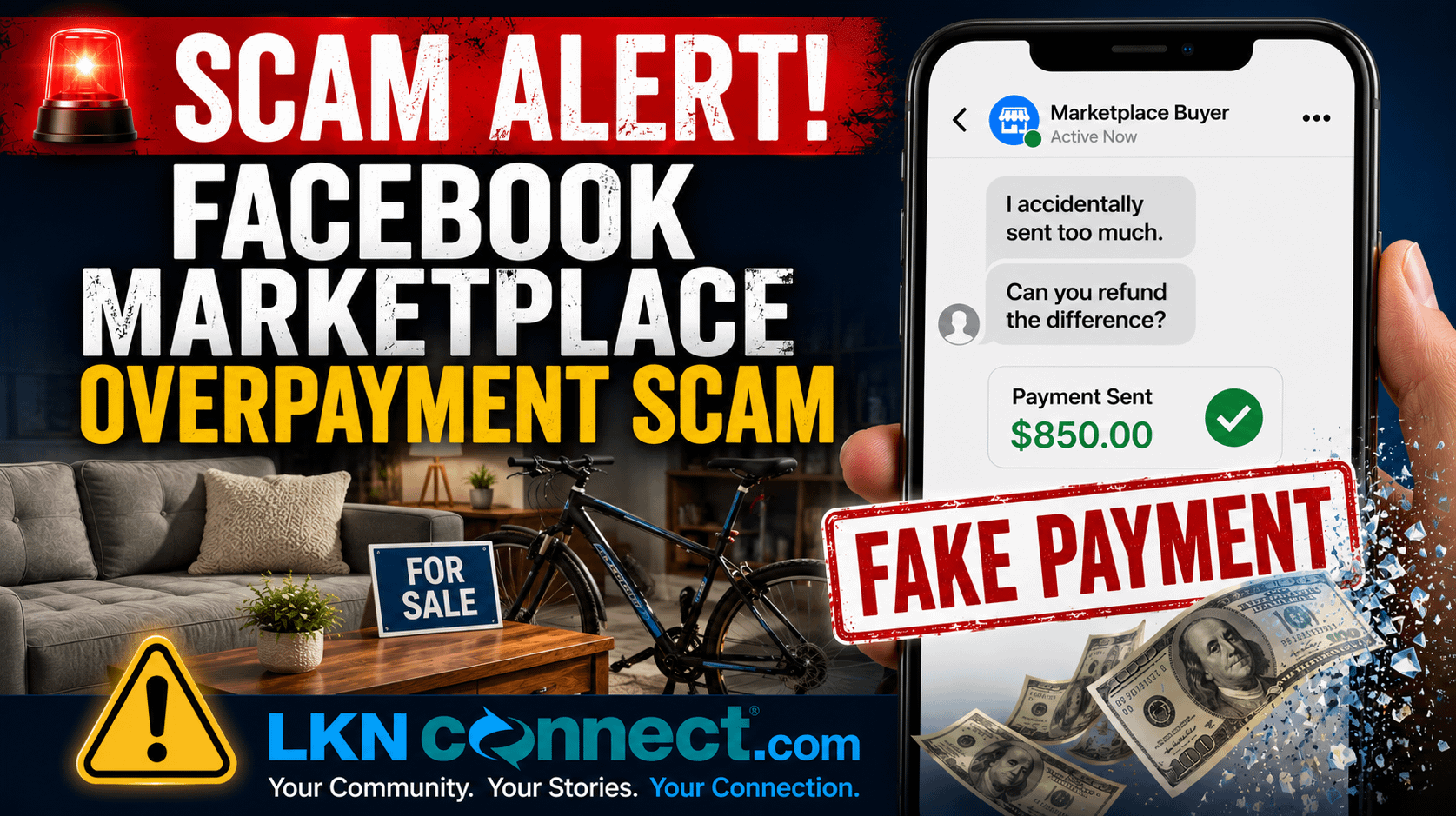

Facebook Marketplace has become one of the most popular ways for Lake Norman residents to buy and sell everything from furniture and electronics to vehicles and household items. Unfortunately, scammers have taken notice and are increasingly targeting sellers through a scheme known as the Marketplace Overpayment Scam.
The scam often begins when a buyer expresses immediate interest in an item and agrees to purchase it without asking many questions. The buyer then claims to have sent payment electronically or provides a cashier’s check for an amount greater than the agreed-upon price.
Next comes the catch.
The buyer explains that the extra money was sent by mistake and asks the seller to refund the difference. In other cases, they may claim the additional funds are intended to cover shipping costs or a moving company. The seller, believing the payment has been received, sends back the excess funds.
Days later, the seller discovers the original payment was fraudulent. The cashier’s check is fake, the payment confirmation was fabricated, or the electronic transfer never actually cleared. The scammer disappears, leaving the seller responsible for the money they refunded.
Another variation involves fake emails that appear to come from PayPal, Venmo, Zelle, Cash App, or a bank. These messages may claim that funds are being held until the seller upgrades an account or pays a fee. Legitimate payment services do not require sellers to send money to receive money.
If you receive a suspicious message from a Facebook Marketplace buyer claiming they accidentally overpaid, don’t panic—but don’t act quickly either. Scammers rely on creating confusion and urgency to get victims to send money before they realize something is wrong.
Here are some simple steps to protect yourself:
✅ Stop and Verify the Payment
Never rely on screenshots, emailed receipts, or text messages claiming a payment was sent. Log directly into your bank, PayPal, Venmo, Cash App, or other payment service and confirm the funds have actually cleared.
✅ Do Not Refund Money
If someone says they accidentally overpaid, do not send money back. Legitimate buyers can work with their bank or payment service to correct an error.
✅ Be Suspicious of Complicated Transactions
Most legitimate buyers simply pay the agreed price and pick up the item. Requests involving extra money, shipping agents, movers, gift cards, or third-party payments are major red flags.
✅ Avoid Cashier’s Checks from Strangers
Many counterfeit cashier’s checks initially appear legitimate and may even be deposited by your bank before being identified as fraudulent days later.
✅ Report the Buyer
If you suspect a scam, report the buyer directly through Facebook Marketplace and block further communication.
✅ Trust Your Instincts
If a deal feels rushed, confusing, or too good to be true, walk away. There will always be another buyer.
A legitimate buyer wants your item. A scammer wants your money.
The safest Marketplace transactions are simple: meet locally, verify payment directly, and never refund money based on an unverified payment. A few minutes of caution can save you hundreds—or even thousands—of dollars.
Stay Alert. Stay Safe. Protect Your Money.
• Never refund money until a payment has fully cleared and been verified.
• Be suspicious of buyers who overpay or create complicated payment arrangements.
• Verify payments directly through your banking or payment app—not through emailed receipts.
• Avoid accepting cashier’s checks from unknown buyers.
• Whenever possible, conduct transactions in person and use cash or verified payment methods.
Facebook Marketplace can be a valuable community resource, but caution is essential. If a deal seems unusually complicated or too good to be true, trust your instincts. Taking a few extra minutes to verify payment can save you from losing hundreds—or even thousands—of dollars.
Stay alert. Verify before you refund. Protect your money.